
Turning kitchen waste to vegetables is simpler than most urban households think. Turning kitchen waste to vegetables is simpler than most urban households think. Once your Marigold composter produces its first harvest, the question most customers ask is a practical one — what do I do with the compost now?
From Kitchen Waste to Vegetables: What Happens After Harvest
Compost harvested from a Marigold composter is not immediately ready for use. It needs a curing period of approximately two weeks.
Here is the process:
After harvesting, transfer the compost to a jute bag. Jute allows natural aeration while retaining moisture. Keep the compost damp during this period. Not wet. Just consistently moist.
This curing period allows the composting process to fully complete. Immature compost can harm plant roots. Cured compost is stable, rich in nutrients and safe for direct contact with plant roots and seedlings.
Two weeks of curing produces compost that is dark, earthy smelling and ready to work with.
This is the first real step in the journey from kitchen waste to vegetables — getting the compost stable enough to support plant life.
How to Use Compost as a Potting Mix
The actual transition from kitchen waste to vegetables happens at this stage — when cured compost becomes a potting mix. For urban households with limited or no soil space, harvested compost works excellently when combined with cocopeat in equal proportions.
Mix one part cured compost with one part cocopeat.
This combination works well for pots, containers and grow bags for three specific reasons.
First, it does not compact over time. Soil-based mixes compact with repeated watering, reducing aeration to plant roots. A compost and cocopeat mix stays loose and well aerated.
Second, it retains moisture effectively. Cocopeat has excellent water holding capacity. Combined with compost, the mix stays consistently moist without waterlogging.
Third, it is biologically active. Compost from organic kitchen waste is rich in beneficial microbes that support plant health and root development. This is not an inert growing medium. It is a living one.
Where Urban Households Can Grow
Marigold’s composting customers in Bangalore are turning kitchen waste to vegetables in spaces most people overlook — terraces, balconies, narrow side patches and even sunlit windows.
Terraces and rooftops are the most productive spaces available in apartment buildings. Even a small terrace with 10 to 15 grow bags can produce a meaningful quantity of vegetables and greens.
Balconies with grow bags or containers work well for smaller plants like lettuce, spinach, methi, coriander and herbs.
Open patches of land between apartment buildings can be converted into small kitchen gardens using compost as a soil amendment.
For households with no outdoor space at all, indoor growing using containers near windows is possible with a compost and cocopeat growing medium.
A Real Example: Bakers Abode, Bangalore
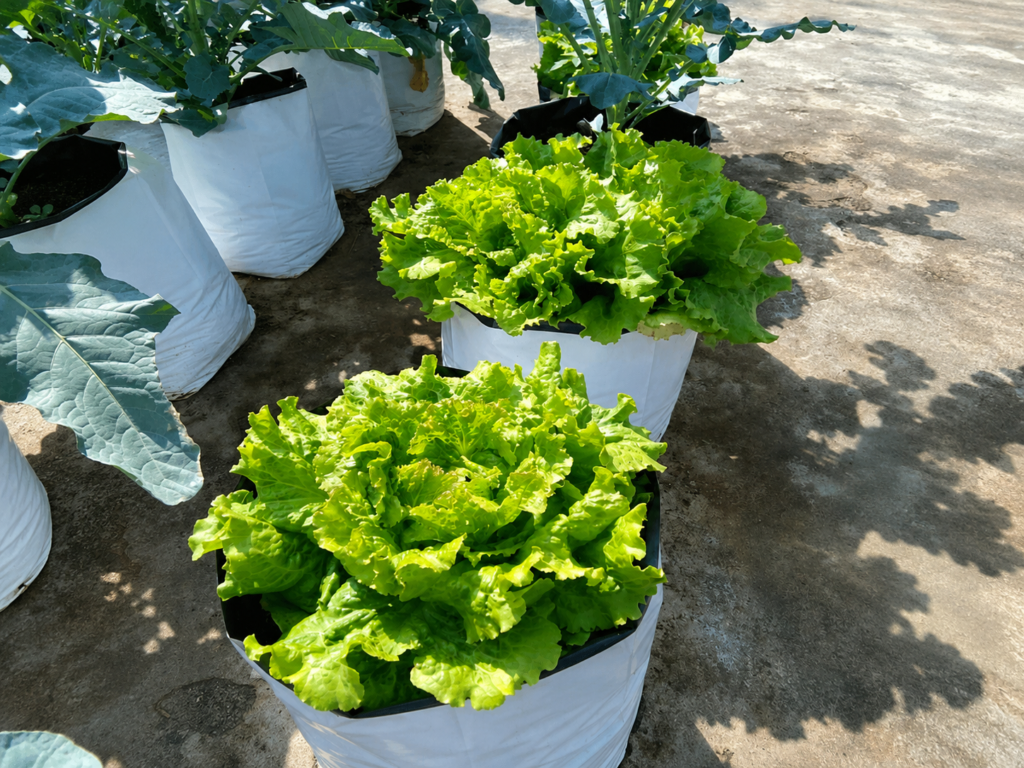
Savita and Hemanth Uchil, who run Bakers Abode in Bangalore, are Marigold composting customers. On the rooftop of their establishment they grow Lettuce and Broccoli using a mix of Marigold compost and cocopeat.
The lettuce grown on their rooftop goes directly into the burgers, salads and sandwiches they serve.
Their rooftop is a working example of kitchen waste to vegetables in action. What begins as kitchen waste completes a full circle — composted on site, cured, used as growing medium, and harvested as fresh produce that goes back into the kitchen.
This is what a circular approach to organic waste looks like in practice.
Best Vegetables to Grow from Kitchen Waste in Bangalore
If you’re starting your own kitchen waste to vegetables system, these are the varieties that grow reliably in a compost and cocopeat mix in Bangalore’s climate:
Leafy greens: Lettuce, spinach, methi, palak, amaranth and coriander grow quickly and produce multiple harvests from a single planting.
Vegetables: Broccoli, tomatoes, chillies, capsicum and beans grow well in larger containers or grow bags with adequate depth.
Herbs: Basil, mint, curry leaves and lemongrass grow reliably in smaller containers and require minimal maintenance.
Bangalore’s relatively mild climate allows year-round growing for most of these varieties.
The Broader Impact
A typical Bangalore household generates approximately 800g of compostable kitchen waste every day. That waste has two possible destinations.
It goes to a landfill where it releases methane, contributes to soil contamination and adds to the city’s growing waste burden.
Or it goes into a composter at source and follows the kitchen waste to vegetables path — becoming nutrient-rich growing medium that produces food within the same household or community that generated the waste.
The second path closes the loop entirely. Waste becomes compost. Compost becomes food. Food generates more organic waste. The cycle continues with nothing leaving the system as a burden.
What could have been a pile of organic waste adding to Bangalore’s landfills becomes a working kitchen waste to vegetables system that puts fresh food on the table.
Frequently Asked Questions
What do I do with compost after harvesting from my Marigold composter? After harvesting, transfer compost to a jute bag and allow it to cure for two weeks in a damp condition. Once cured, use it as a growing medium for vegetables and plants by mixing it with cocopeat in equal proportions.
How do I make a potting mix using compost? Mix one part cured compost with one part cocopeat. This combination creates a lightweight, well-aerated and moisture-retaining growing medium suitable for pots, containers and grow bags. It does not compact over time and is rich in beneficial microbes that support plant growth.
How do I turn kitchen waste to vegetables in a Bangalore apartment? Yes. A compost and cocopeat mix works well in containers, grow bags and pots on balconies and terraces. Leafy greens like lettuce, spinach and methi are particularly well suited to container growing and produce multiple harvests.
Why should I cure compost before using it? Freshly harvested compost may still be in an active decomposition phase. Applying immature compost directly to plants can damage roots. A two-week curing period in a damp jute bag allows the process to fully complete, producing stable and plant-safe compost.
What vegetables grow well in Bangalore using a compost and cocopeat mix? Lettuce, spinach, methi, coriander, broccoli, tomatoes, chillies and capsicum all grow well in Bangalore’s climate using a compost and cocopeat potting mix. Leafy greens are the easiest starting point for new kitchen gardeners.
Why is cocopeat added to compost for a potting mix? Cocopeat improves the physical properties of the growing medium. It prevents compaction, improves aeration around plant roots and increases moisture retention. Combined with the biological richness of compost, it creates an ideal growing environment for container gardening.
Every kilogram of kitchen waste that enters a Marigold composter has the potential to return as fresh food. Kitchen waste to vegetables is not just waste management — it is a regenerative system built for urban India.