
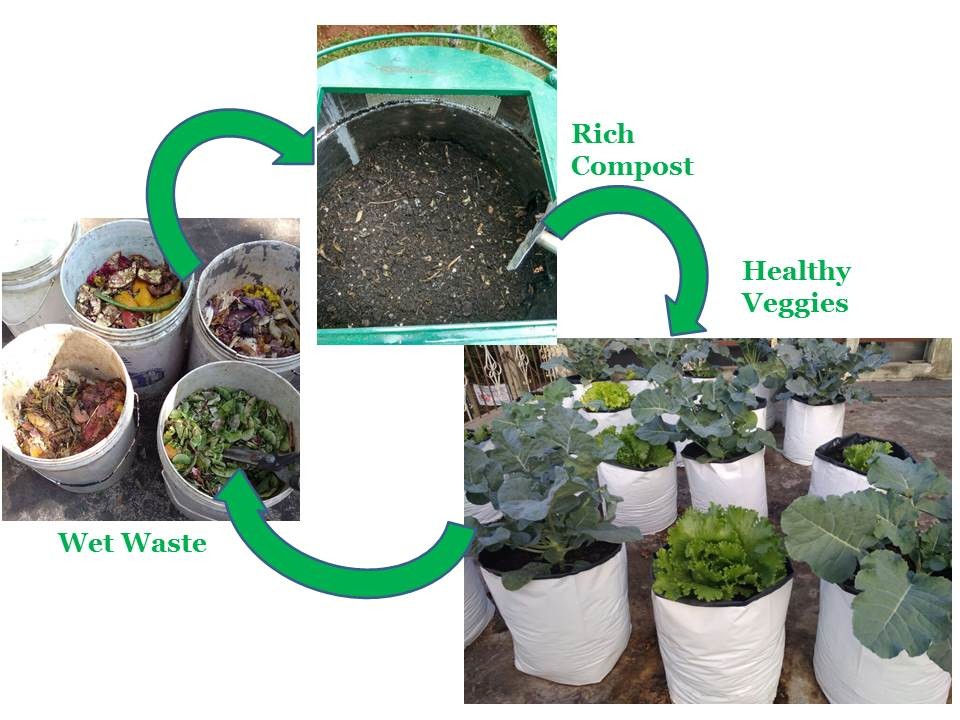
Aerobic composting is the process of converting organic kitchen waste into nutrient-rich compost by maintaining a continuous supply of oxygen to the bacteria that drive decomposition. When managed correctly, aerobic composting produces no foul smell, generates no harmful gases and completes a full composting cycle in 12 to 30 days depending on waste volume and conditions. It is the method used in all Marigold composting systems.
Aerobic composting versus Anaerobic composting: Why the Difference Matters
All organic matter decomposes eventually. The question is how it decomposes and what it produces in the process.
Aerobic decomposition happens when organic matter has consistent access to oxygen. Bacteria break down the waste and release carbon dioxide which is odourless. The process is clean, controlled and produces compost that is rich in nutrients.
Anaerobic decomposition happens when organic matter is denied oxygen. This occurs when waste is buried in soil, packed in plastic bags, dumped in closed containers or piled in heaps. The process produces methane, hydrogen sulphide and ammonia. These gases are harmful. Methane has no odour but is inflammable and damaging to the ozone layer. Hydrogen sulphide and ammonia produce the characteristic foul smell of rotting waste.
Every household that has left kitchen waste in a bin for a day or more knows what anaerobic decomposition smells like. The situation is far worse at a large scale dumping ground where millions of tonnes of organic waste are decomposing anaerobically and generating gases continuously.
Aerobic composting is the planned, controlled alternative. It requires management but produces a clean, valuable output with no harmful byproducts.
What Aerobic Composting Needs
Two inputs are essential for effective aerobic composting.
Oxygen: The bacteria driving decomposition need a continuous supply of fresh air. This is maintained through daily aeration by mixing and turning the compost pile. Without regular aeration, anaerobic pockets form within the pile and odour results.
The right Carbon to Nitrogen ratio: Wet kitchen waste is rich in Nitrogen. Dry brown leaves or cocopeat are rich in Carbon. Combining them in the right proportion gives the bacteria the balance they need to thrive and produce high quality compost. The standard ratio is one volume of wet waste to half a volume of dry leaf dust or cocopeat.
The Complete Aerobic Composting Process
Step 1. Measure and Chop the Wet Waste
Begin by measuring the volume of wet kitchen waste appropriate to the size of your composter. Do not overload the system.
Chop the waste into smaller pieces using garden shears. Smaller pieces compost faster because they present more surface area to bacteria. Aim for pieces of approximately 1 to 2 cm. Do not mash the waste into a pulp. Air circulation between pieces is essential for aerobic conditions.
If using a powered shredder, choose one that breaks waste into 1 to 2 cm pieces without pureeing it.
Step 2. Add the Carbon Rich Additive
To one volume of chopped wet waste, add half a volume of dry brown leaf dust or cocopeat.
Dry leaf dust is the preferred additive. In powdered form it coats the surface of wet waste evenly and blends without requiring additional chopping. This even coating is important for maintaining the correct carbon to nitrogen ratio throughout the pile.
Cocopeat is an effective alternative when dry leaves are not available. It is derived from coconut husks and is widely available in Bangalore.
Step 3. Blend the Dry and Wet Waste
Once the carbon additive is added, blend the wet and dry materials thoroughly using a rake or trowel. The goal is an even mixture where the leaf dust or cocopeat forms a coating on the wet waste.
Uneven blending leaves wet pockets that can become anaerobic. Thorough mixing at this stage prevents odour problems later.
Step 4. Daily Aeration by Mixing
Once a day, aerate the entire pile by turning it thoroughly. This is the single most important maintenance task in aerobic composting.
Work through the pile one quarter at a time. Remove the blended waste from one quarter until the bottom of the composter is clean. Pile it temporarily on the remaining three quarters. Allow it to air for one to two minutes then return it to its quarter. Move to the next quarter and repeat until all four quarters are done.
During the first two to five days you will notice the core of the composter becoming hot. Temperatures in this thermophilic phase can reach 50 to 70 degrees Celsius. This is normal and indicates active decomposition. You may see vapour rising from the pile during mixing. This is expected.
As the pile cools after the thermophilic phase, a white fungus-like coating called actinomycetes will appear on the waste. This is beneficial. Actinomycetes break down tough plant tissues that bacteria alone cannot process.
Step 5. Maintaining Moisture
The compost pile must stay consistently moist throughout the composting period. Not dry. Not waterlogged.
A dry pile stops composting. If you notice the pile drying out, sprinkle water and mix thoroughly.
A waterlogged pile creates anaerobic conditions and produces odour. If the pile becomes too wet, add more leaf dust or cocopeat to absorb the excess moisture. This is more likely to occur during Bangalore’s monsoon season or when the waste input contains high water content such as fruit pulp.
The correct moisture level feels like a wrung out sponge. Moist throughout but not dripping.
Step 6. Curing the Compost
At the end of the composting period the compost will have turned almost black and its temperature will have returned to ambient. This marks the end of the active composting phase.
Transfer the compost to a jute or cotton cloth bag. These natural fibres allow the compost to breathe while retaining moisture. Keep the compost damp during the curing period.
Leave it undisturbed for approximately 20 days. This curing period allows the final slow phase of composting to complete fully. Compost that skips curing may still contain unstable compounds that can harm plant roots.
After 20 days the compost is ready for use. It does not need to be fully powdered to be effective. Any large pieces that have not fully composted can be returned to the next batch.
Step 7. Storage, Use and Reuse
Cured compost can be added directly to garden soil, used as a potting mix or combined with cocopeat as a growing medium for container plants.
Store compost slightly moist so the beneficial bacteria remain alive and active. Dry stored compost loses much of its biological value.
Reserve a small portion of each finished batch to add to the next composting cycle. This starter compost already contains the bacteria needed to accelerate the next batch and reduces the time to reach the thermophilic phase.
Aerobic Composting Bangalore: Why It Works for Every Home
Bangalore generates significant volumes of organic kitchen waste every day. A typical household produces approximately 800g of compostable wet waste daily. Across the city that represents thousands of tonnes of organic matter that currently travels to landfills where it decomposes anaerobically and generates methane.
Aerobic composting at source eliminates that journey. Waste processed in a Marigold composter at home or within an apartment complex never leaves the premises as organic waste. It leaves as compost. A resource rather than a burden.
Prudent Eco Systems has demonstrated this process across homes and apartment complexes in Bangalore. Community composting systems installed by Prudent Eco Systems handle more than 5 tonnes of organic waste per month entirely on site.
What can be composted at source should not be transported across the city even if for processing.
Frequently asked questions on Aerobic Composting
What is aerobic composting? Aerobic composting is a controlled process that converts organic kitchen and garden waste into compost by maintaining a continuous supply of oxygen to the bacteria driving decomposition. It produces carbon dioxide which is odourless and results in nutrient-rich compost with no harmful gases.
How is aerobic composting different from anaerobic decomposition? Aerobic composting requires oxygen and produces carbon dioxide and compost. Anaerobic decomposition happens without oxygen and produces methane, hydrogen sulphide and ammonia. Aerobic composting is clean and odour-free. Anaerobic decomposition produces the foul smell associated with rotting waste and generates gases harmful to the atmosphere.
How long does aerobic composting take? The active composting phase takes 12 to 30 days depending on waste volume, moisture levels and temperature. A curing period of approximately 20 days follows the active phase. Total time from waste input to ready-to-use compost is typically 30 to 50 days.
What is the thermophilic phase in composting? The thermophilic phase is the period of most rapid decomposition in aerobic composting. Temperatures in the compost pile reach 50 to 70 degrees Celsius. It lasts two to five days and is indicated by visible vapour rising from the pile during mixing. This heat is produced by the exothermic reactions of aerobic bacteria and is a sign of healthy composting.
What is the correct carbon to nitrogen ratio for aerobic composting? The standard ratio is one volume of wet kitchen waste to half a volume of dry leaf dust or cocopeat. Wet waste is nitrogen-rich. Dry brown leaves and cocopeat are carbon-rich. The correct balance gives bacteria the nutrients they need to decompose waste efficiently and produce high quality compost.
Why does aerobic compost need daily mixing? Daily mixing aerates the pile by exposing all material to fresh air. Without regular aeration, anaerobic pockets form within the pile where oxygen cannot reach. These pockets produce the odour associated with rotting waste. Daily mixing prevents this and maintains the aerobic conditions necessary for clean, efficient composting.
What is curing and why is it necessary? Curing is the final maturation phase of composting. After the active composting phase, compost is transferred to a jute or cotton bag and kept damp for approximately 20 days. This allows the last stage of decomposition to complete fully. Compost that is not cured may contain unstable compounds that can damage plant roots when applied to soil.
Can I use aerobic compost directly in pots and containers? Yes. Cured aerobic compost works well as a potting mix when combined with cocopeat in equal proportions. This combination does not compact over time, retains moisture effectively and is rich in beneficial microbes that support plant growth.
Aerobic composting is not a new technology. It is an age old practice used on farms for centuries to return nutrients to soil. Marigold composters bring that practice into urban homes and apartments in Bangalore making it practical, odour-free and accessible for every household.